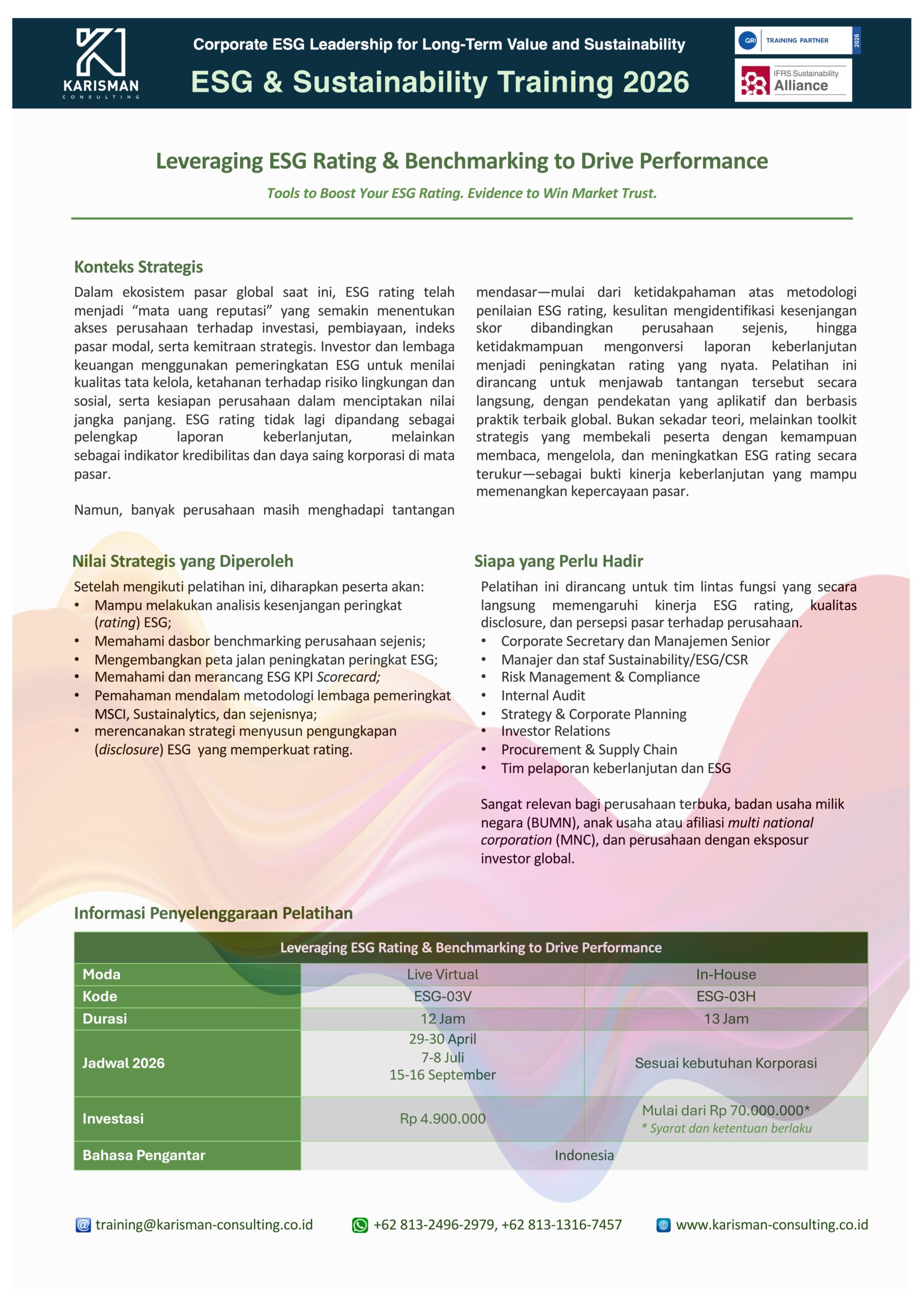






Understand the Score. Improve the Outcome.
Program Overview
The global ESG landscape is undergoing a structural shift—from voluntary, narrative-driven disclosure toward financially material reporting. IFRS S1 and S2 formalize this transition by linking sustainability performance directly to financial risk, strategic positioning, and enterprise value.
Under these standards, ESG is no longer treated as a parallel report, but as an integrated component of financial disclosure. Organizations are expected to demonstrate how sustainability-related risks and opportunities influence cash flows, asset valuation, and long-term resilience.
This program enables organizations to operationalize that shift—aligning ESG disclosures with IFRS requirements, and ensuring that reporting is structured, decision-useful, and relevant to global capital markets.
Why This Training Matters
- Many organizations continue to report ESG information in isolation, limiting its relevance for investors. Without integration into financial frameworks, disclosures risk being perceived as supplementary rather than decision-critical.
- This misalignment reduces comparability, weakens investor confidence, and may constrain access to capital in increasingly standardized markets. As expectations converge around IFRS, the ability to connect ESG performance with financial outcomes becomes essential.
- Financially integrated reporting addresses this gap. By aligning disclosures with IFRS S1 and S2, organizations can enhance transparency, improve comparability, and position themselves as credible, investment-ready entities within global capital markets.
What You Will Gain
- Decode ESG rating methodologies (MSCI, Sustainalytics, etc.)
- Conduct ESG benchmarking and gap analysis
- Develop KPI scorecards and improvement plans
- Align disclosures with rating expectations
- Strengthen market positioning
Training Schedule 2026
- 29-30 April (Live Virtual)
- 7-8 July (Live Virtual)
- 15-16 July (Live Virtual)